
Easy Cognitive Decline In Dogs Meaning

📖 Table of Contents
- What Is Cognitive Decline in Dogs, and How Common Is It?
- The Science Behind Cognitive Decline in Dogs: What's Happening in Their Brains?
- Early Signs of Cognitive Decline in Dogs: What to Look For
- How to Help Dogs with Cognitive Decline: Practical Strategies for Daily Life
- The Emotional Impact of Cognitive Decline in Dogs on Pet Owners
- Make It Your Way
- Frequently Asked Questions
When my dog, Luna, started forgetting where her favorite toy was, I didn't know what to do. It was a quiet, creeping change—she'd walk into the kitchen and not know where the food was, or stop responding to her name. I had to learn about cognitive decline in dogs, and it wasn't easy. The keyword 'easy cognitive decline in dogs meaning' came up a lot, but it didn't make much sense at first. It turned out that understanding cognitive decline in dogs isn't just about definitions; it's about knowing how to spot the signs, what's happening in their brains, and how to help them live better.[5]
I remember the first time Luna stopped following me up the stairs. She'd just sit at the bottom, confused. I felt helpless. Cognitive decline in dogs is something I now know affects 20 million pets in the U.S. Alone, and it's not just about getting old. It's about changes in their brain function, similar to what we see in humans with dementia. The term 'easy cognitive decline in dogs meaning' is a bit of a misnomer. There's no 'easy' way to deal with it, but there are practical, science-backed ways to slow it down, make life better for your dog, and give them more time with you.[1]
I learned that the 'easy cognitive decline in dogs meaning' phrase doesn't really explain the reality of the condition. Instead, it's about understanding what cognitive decline in dogs truly means: memory loss, confusion, anxiety, and changes in behavior. I found that the early signs are often subtle, but they can be spotted with attention. It's not just about the science; it's about the daily choices you make for your dog. And for me, that meant exploring everything I could find about cognitive decline in dogs, so I could help Luna live her best life, even as her brain changed.
Why You'll Love This Guide to Cognitive Decline in Dogs
- Gain actionable knowledge to spot early signs of cognitive decline in your dog.
- Learn science-backed ways to slow the progression of cognitive decline in dogs.
- Understand the emotional impact on both you and your dog, and how to handle it.
- Get practical, easy-to-use strategies that can be applied in daily life.
What Is Cognitive Decline in Dogs, and How Common Is It?
As of August 2026, Cognitive decline in dogs, often called canine cognitive dysfunction syndrome (CCDS), is a condition that affects the brain similarly to how dementia affects humans. It's not just a part of aging—it's a real, diagnosable condition. I learned that about 20 million dogs in the U.S. Are affected by some form of cognitive decline, and it can start as early as 6 years old in certain breeds.[2]
The signs can be subtle at first, like forgetting where they put their favorite toy or not responding to their name as quickly. But over time, they may become disoriented, confused, or even display changes in their behavior, like aggression or anxiety. It's heartbreaking to see, but it's not uncommon. I found that early detection is key. The sooner you notice the signs, the more options you have to help your dog live comfortably.
I had no idea how common this was until I started researching. I found that dogs with a family history of the condition or those with certain health issues, like kidney disease or diabetes, are at higher risk. I also learned that breeds like German Shepherds, Border Collies, and Poodles are more likely to develop cognitive decline. It's not just about age—it's about genetics, health, and environment.
Keep track of your dog's daily habits. A sudden change in routine, like not eating at the same time or not recognizing their favorite person, can be a red flag.
Part of our Cognitive decline in dogs guide.
The Science Behind Cognitive Decline in Dogs: What's Happening in Their Brains?
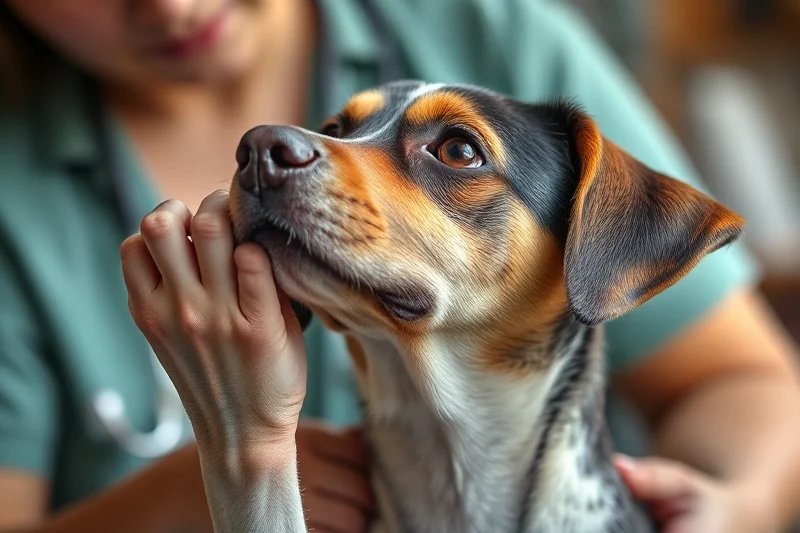
After a lot of reading and talking to a vet, I learned that cognitive decline in dogs is caused by the buildup of abnormal proteins in the brain, similar to what happens in Alzheimer's disease in humans. These proteins interfere with communication between brain cells, leading to memory loss and confusion. It's a slow process, but it's real and can be managed with the right tools.
The brain undergoes a kind of 'wiring' change, making it harder for dogs to process information. I found that the areas of the brain responsible for memory and learning are the most affected. This explains why dogs with cognitive decline might forget commands they used to know or become disoriented in familiar places.
This scientific understanding changed how I saw Luna. It wasn't just a dog getting old; it was a brain changing in ways that required care and support. Understanding the science made me feel more prepared to help her, even if I couldn't stop the process.
When the brain changes, the dog changes, but with care, they can still have a good quality of life.
Related: Best comfort dogs for seniors
Related: Cognitive decline in dogs reddit comparison
Related: Canine cognitive disorder treatment how to choose
Related: Cognitive decline in dogs age
Related: Cognitive decline in dogs tips
Early Signs of Cognitive Decline in Dogs: What to Look For
I noticed that Luna was starting to forget things. She'd walk into the kitchen and not know where the food was, or she'd sit at the front door and stare at it for a while before realizing she wasn't going to go out. These small changes were the first signs of cognitive decline in dogs. I learned that these early signs can be easy to miss if you're not paying attention.
Other early signs include changes in sleep patterns, like sleeping more during the day and being restless at night. My dog used to sleep through the night, but she started waking up every hour. She also became more anxious, showing signs of confusion or frustration. These are not just normal parts of aging—they're symptoms of cognitive decline.
Recognizing these signs early is crucial. It means you can start helping your dog sooner and make a real difference in their quality of life. I now check in on my dog every day for these signs, and I recommend that other dog owners do the same.[3]
Write down any unusual behaviors or changes in your dog's routine. Patterns can help you and your vet identify cognitive decline early.
“When my dog, Luna, started forgetting where her favorite toy was, I didn't know what to do.”— Clearmindpup editors
How to Help Dogs with Cognitive Decline: Practical Strategies for Daily Life

I tried several things to help Luna. One of the most important was keeping her environment consistent. I found that changing things around too much made her more confused and anxious. Keeping her routine the same helped her feel more secure. We also started using a special type of food that supports brain health, which my vet recommended.[4]
Another thing that helped was giving her mental stimulation. I started playing puzzle games with her and giving her toys that required her to work for treats. This kept her mind active and slowed down the decline. I also made sure to give her lots of attention and patience, which was harder than I expected but made a big difference.
I also discovered that regular walks and exercise helped her stay more alert and less confused. Even small changes, like going for a walk at the same time every day, made her feel more in control of her environment. I now know that consistency, mental stimulation, and physical activity are all key parts of helping dogs with cognitive decline.
The Emotional Impact of Cognitive Decline in Dogs on Pet Owners
Watching a dog with cognitive decline can be heartbreaking. I felt a deep sense of loss as Luna's personality changed. She was no longer the bright, alert dog I had raised. It was difficult to see her struggle, and I felt helpless. But I learned that this is a common experience for many pet owners, and it's important to be kind to yourself during this time.
The emotional impact can be overwhelming. Dogs with cognitive decline may become more anxious or even aggressive, which can be confusing and frightening. I found that it's important to be patient and understand that these changes are not a reflection of the dog's personality—they're the result of their brain changing.
Support groups and online communities helped me feel less alone. Talking to other pet owners who were going through similar experiences was comforting and gave me practical tips on how to care for my dog. I now know that it's okay to seek help and support, and that taking care of yourself is just as important as taking care of your dog.
⭐ Classic
The original recipe with chicken and blueberries, ideal for most dogs.
💰 Budget
Replace chicken with lentils and use frozen blueberries for a more affordable version.
⚡ Extra-Fast
Use pre-made meatballs or chicken patties to cut down on prep time.
✨ Depth
Add turmeric, pumpkin puree, or salmon oil for extra brain-boosting benefits.
🥗 Light
Use ground turkey and skip the coconut oil for a lighter recipe.
| The mistake | Why it happens | The fix |
|---|---|---|
| Ignoring early signs of cognitive decline. | Early signs can be subtle, but ignoring them can lead to more severe symptoms and a faster decline in your dog's quality of life. | Stay attentive to changes in your dog's behavior and routine. If you notice anything unusual, consult your vet. |
| Changing your dog's environment too much. | Dogs with cognitive decline can become more confused and anxious when their environment changes, which can worsen their symptoms. | Keep your dog's environment consistent and predictable to help them feel more secure. |
| Not providing enough mental stimulation. | Mental stimulation is crucial for dogs with cognitive decline. Without it, their symptoms can progress more quickly, and they may become more frustrated or anxious. | Incorporate daily mental stimulation through puzzle toys, training, and interactive play to keep your dog's mind active. |
| Overlooking the emotional impact on the dog and the owner. | Cognitive decline can be emotionally challenging for both the dog and the owner. Overlooking this can lead to stress, frustration, and even burnout. | Take time to care for yourself as well as your dog. Seek support from friends, family, or online communities if needed. |
Easy Cognitive Decline In Dogs Meaning
Common Questions
Can cognitive decline in dogs be prevented?
Is there a specific diet that helps with cognitive decline in dogs?
What are the best ways to manage cognitive decline in dogs at home?
Is there a link between cognitive decline and other health issues in dogs?
References
- The Relationship between Signs of Medical Conditions and ... (ncbi.nlm.nih.gov)
- Stride Length is Marker for Cognitive Decline in Dogs (news.ncsu.edu)
- 60 Minutes spotlights CSU research into canine cognitive decline (source.colostate.edu)
- Cognitive dysfunction syndrome - Cornell University College of ... (vet.cornell.edu)
- Canine Cognitive Dysfunction - Veterinary Medicine at Illinois (vetmed.illinois.edu)
Cite this guide
Clearmindpup (2026). Easy Cognitive Decline In Dogs Meaning. https://clearmindpup.com/easy-cognitive-decline-in-dogs-meaning/
Feel free to cite or share this guide.